Calling all biologists... from the British Society for Science and Literature:
‘Cultivating Common Ground: Biology & the Humanities’
What do biologists know and think of the humanities? And what do they make of those humanities scholars – literary critics and historians – who have made biology their area of study?
University of Reading staff in the biological sciences and the humanities are currently seeking practising biologists to participate in an AHRC-funded workshop which will address these and other questions. The workshop will consist of short presentations by humanities scholars whose research focuses on biology, followed by discussion and analysis of these and other topics. The workshop will be lead by Nick Battey, a plant biologist with a long-standing interest in the value of humanities research to biology, and there will be presentations by John Holmes (Darwinian evolution in poetry), Karin Lesnik-Oberstein (pre-conceptions in biomedical research), David Stack (understanding Victorian science) and Françoise Le Saux (medieval ideas about magic and the natural world).
The workshop will take place on Wednesday 18 July 2012 at the University of Reading’s Whiteknights campus between 0930 and 1700. Refreshments, including lunch, will be provided, as will reasonable travel expenses.
Please see http://www.reading.ac.uk/cultivating-common-ground/ for further information. To register for a place, please contact Rachel Crossland: r.c.crossland@reading.ac.uk.
Showing posts with label biology. Show all posts
Showing posts with label biology. Show all posts
Thursday, 24 May 2012


Tuesday, 15 May 2012
Evo Devo Artist
There's a fascinating interview over on the blog of US literary 'zine Tin House with Anna Lindeman, who has a BS in Biology from Yale and an MFA in Integrated Electronic Arts from Rensselaer Polytechnic Institute:
AL: My work integrates animation, music, and performance to tell stories about evolutionary and developmental (Evo Devo) biology. I consider myself an Evo Devo artist.
My performance Theory of Flight begins as a biology lecture with scientist Alida Kear describing the developmental mechanisms of wing growth. The lecture goes quickly awry, though, when Alida reveals a feather she has grown on her own arm through the successful co-option of avian genes. It becomes clear that Alida’s interest in biological flight is rooted not only in scientific investigation, but also in a deeply personal quest for flight. The episodes of biology lecture, featuring increasingly extreme experiments, are punctuated by dream-like interludes that combine music performed by a singing bird spirit and a look into a cellular world animated with simple materials—yarn becomes DNA, lace and buttons become proteins.
Evo Devo stories appear throughout Theory of Flight. The lecture delves into the genetic mechanisms of feather development, evolutionary theories of flight, and ultimately, investigations into regenerative limbs and transgenics.I like the way Anna talks about her work. She says:
I never felt inhibited by the facts that science provides us with; to me they are the richest treasure trove of source material. Beauty, absurdity, poignancy, whimsy—all of the sensations I hope to craft as an artist have already had some masterful manifestation in nature, and science is a profound way of understanding these manifestations.Very inspiring! Read the whole interview here.
Wednesday, 30 November 2011
Milly: Deep sea flashers

Some brilliant research by Sarah Zylinski that came out of the deep sea research cruise in 2010. Strange to think that even in deep, dark, remote regions, animals still need camouflage...
Saturday, 27 August 2011
Milly: Ugly Fish pt 9
Milly: Ugly Fish pt 8
"Here you are" said Alan, all blasé, as he passed me something he had picked out of the trawl net. It looked like a dead hand on the end of a stick and smelt like one too; I didn't have a clue what I was looking at. The more learned scientists told me it was a stalked crinoid, a sea lilly, part of the Phylum Echinodermata, so related to starfish, sea cucumbers and sea urchins. As I looked closer I realised that it was much more attractive than a decomposing fist, with many intricate feathery arms that I imagined would actually look quite nice when underwater.
 |
| Having a gander at the feeding arms of the crinoid, note the long stalk in the background, these can be 1 metre long! Image: Zan |
 |
| Close up of the main body of the crinoid showing the stem leading to the calyx and then the feeding arms at the end. Image: Zan |
 |
| Another species of deep-sea stalked crinoid called Moulin Rouge (Proisocrinus ruberrimus) photographed on the sea floor. Pretty sexy, for a crinoid. Image: National History Museum |
These fascinating creatures look like plants (hence the name 'sea lily') but have the features of animals such as a basic gut, a simple nervous system and a fully functional circulatory system that transports nutrients, gases and waste products around the body. The many feathery arms found near the mouth (and also unfortunately the anus) are used to filter out small particles in the water where it is trapped in sticky secreted mucus and pushed into the mouth.
 |
| A fossil stalked crinoid, looks a lot like the modern version. Image: web |
Thursday, 4 August 2011
Milly: Ugly Fish pt 2
 |
| RRS James Cook |
Milly: Ugly Fish pt 3
Milly: Ugly Fish pt 4
Milly: Ugly Fish pt 5
Milly: Ugly Fish Pt 6
Milly: Ugly Fish Pt 7
We made it! We are on the James Cook, phew. Since we have been sailing for a few days you might think I'd have worked out where everything was by now but I still end up on the forecastle (I have no idea what that is) deck when trying to find my cabin. Quite a confusing error to make since the forecastle is at the top and my cabin is in the bowels of the ship. My room has no windows which is quite handy as I'm on the 4pm to the 4am shift. So, apparently there is a sauna here but I'm not sure if this is a crew in-joke whereby I turn up at the 'sauna' in a bikini to find that it's actually the engine room.
 |
| Tubes of ocean floor |
There is an interesting mix of scientists aboard this cruise, exploring the Porcupine Abyssal Plain (PAP). Many people from the National Oceanography Centre (NOC), at Southampton, seem to be interested in mud. Not just the mud, they say, but the wee beasties that reside in it. One important group of organisms are the Foraminifera, or forams for short, strange protists that can be used as indicators of environmental change, as they give scientists an indication of what's happening to the oceans' currents. To study forams, this group are sending a machine, consisting of a frame and 8 tubes, flying the bottom of the Atlantic. When it hits the ocean floor the tubes stick into the mud triggering a mechanism that closes them, then bingo, all you need to do next is drag the thing back to the surface and you have loads of lovely mud!
 |
| An unfortunate little sea urchin, captured by one of the tubes |
 |
| Carefully removing mud from the tubes |
(I should also mention that Juliette is still alive)
Tuesday, 26 July 2011
Milly: Ugly fish
 |
| Stomiid. Image: Camilla Sharkey and Julian Partridge |
Milly: Ugly Fish pt 3
Milly: Ugly Fish pt 4
Milly: Ugly Fish pt 5
Milly: Ugly Fish Pt 6
Milly: Ugly Fish Pt 7
When asked about my summer holiday plans recently, I informed my friend that I would be spending a month off the coast of the UK on a months fishing trip. She laughed; I wasn't joking. Come August I'll be up to my ears in gelatinous, benthic fish brought up from thousands of meters and rather alarmingly I've been purchased full body overalls due to the "repulsive stench" of the fish that "never leaves the fabric". I'll be aboard the RSS James Cook for a month, so to stave off insanity I'm planning to blog from the ship to keeping you up to date with the latest discoveries. It seems to be a little known fact that members of the Bristol Biology department study deep sea fish and so I thought it best to bring a little of the research into the lime light.
Dr Nick Roberts, part of a team of Bristol vision scientists, has gathered together a group to investigate colour and light in nature. As part of this, a new post doc, Dr Juliette McGregor, will be looking at the effect of pressure on photoreceptors. The pressure exerted on deep sea fish is enough to alter the protein structure and this includes that of visual pigments so in August, Juliette and I will be collecting deep sea fish retinal tissue which will be used to examine their spectral properties under pressure (whilst trying not to be sick onto the specimens as we dissect stinky fish...on a rolling boat...in the dark).
Another ongoing project has been looking at the eyes of Malacosteus niger (image below) the stoplight loosejaw, a fish with red eyes, gaping mouth and a light organ underneath each eye that emits red light.
 |
| Stoplight loosejaw, Malacosteus niger |
 |
| Dolichopteryx longipes photographed from above |
These fish appear to have four eyes and although there are just two, each is separated into two parts, one looking upwards and the other down. This allows D.longipes to detect silhouettes of animals above it, but also detect bioluminescence produced by animals below. For more info on this fascinating fish see this news article or paper.
I think that's quite enough biology for now, but I hope I leave you with a better idea of what strange things are going on in the Bristol University biological department and keep your eyes peeled for posts in August from the Porcupine Abyssal Plain, eek!
Tuesday, 10 May 2011
Milly: What lies beneath....
To see the beetles in action have a look at this video.
So next time you're out having a nice stroll in the countryside, make sure you tip your hat at the sexton beetle for clearing away the corpses.
Tuesday, 26 April 2011
Angel: Manipulating biologies: convergences and divergences of bioart and biosciences event
Controversial and unconventional, those are the words that come up into my mind every time I remember the content of Tuesday April 12th's "Manipulating biologies: convergences and divergences of bioart and biosciences" event at the Grant Bradley Gallery. As a scientist, I have been interested about the kind of concept that makes art and science relationship closer or distant. Nevertheless, my interpretation is more related with art being source of inspiration to science and not in the opposite way. Kira O’Reilly and Professor Paul Martin showed up their experience trying to answer scientific and philosophical questions based in the human body as a subject of research performing biotechnical techniques.
My body as a specific place to experiment and create science...
Kira O’Reilly's art is able to shock any kind of person with sense of safety, or well, conventional people dedicated to experimental science. I mean, when the artist showed pictures about injuries in her body, evoking traditional Chinese medicine, this act wasn’t anything out of conventions, many people use piercings or tattoos over their bodies. However, the idea to use her body as a material to create art and to ask oneself where the border of life begging and end sounds strange.
...decontextualization of flesh from the body as material, as living, to understand conditions to exist what is life...

Breaking every rule is a good start to ask new questions and as a consequence create new perspectives about daily activities that might to be common for each people, for example persons involved in science. Let’s use the infinity behind your eyelids, close your eyes for few seconds draw the naked body of a woman inside a fume hood in your laboratory – keep in your mind these questions: What does it mean for you? What if you are the person inside this small place used to protect you against toxic substances? To be honest, when I saw that picture I felt totally confused because the elements are familiar for me, but something inside me said: What is the aim of this? It’s wrong. The most important thing is that maybe this outrageous picture has changed something introspective about me and the lab environment.
...researching how to build or rebuild tissues...
Professor Martin is carrying out a research in embryology, their main interest is focused on understanding the mechanism involved in the creation of human tissues. Professor Martin has the belief that there are aspects from life sciences that can inspire artists to create art. During the talk was cited the case of a woman that created some fashion designs inspired by embryos. On the other hand, he declare that scientist has to think a little bit as an artist but the work of a scientist because they have to be a good observers.
These talks showed that both disciplines can interact in a dynamic dialog using different and common techniques or methods that allows the expansion of the knowledge and understanding of life.
Posted by Angel
My body as a specific place to experiment and create science...
Kira O’Reilly's art is able to shock any kind of person with sense of safety, or well, conventional people dedicated to experimental science. I mean, when the artist showed pictures about injuries in her body, evoking traditional Chinese medicine, this act wasn’t anything out of conventions, many people use piercings or tattoos over their bodies. However, the idea to use her body as a material to create art and to ask oneself where the border of life begging and end sounds strange.
...decontextualization of flesh from the body as material, as living, to understand conditions to exist what is life...

Kira O’Reilly and Jennifer Willet - Untitled (Hamster Ovaries Protocol) series - The Art and Genomics Centre, University of Leiden, The Netherlands, 2008 Photo: Rune Peitersen
Breaking every rule is a good start to ask new questions and as a consequence create new perspectives about daily activities that might to be common for each people, for example persons involved in science. Let’s use the infinity behind your eyelids, close your eyes for few seconds draw the naked body of a woman inside a fume hood in your laboratory – keep in your mind these questions: What does it mean for you? What if you are the person inside this small place used to protect you against toxic substances? To be honest, when I saw that picture I felt totally confused because the elements are familiar for me, but something inside me said: What is the aim of this? It’s wrong. The most important thing is that maybe this outrageous picture has changed something introspective about me and the lab environment.
...researching how to build or rebuild tissues...
Professor Martin is carrying out a research in embryology, their main interest is focused on understanding the mechanism involved in the creation of human tissues. Professor Martin has the belief that there are aspects from life sciences that can inspire artists to create art. During the talk was cited the case of a woman that created some fashion designs inspired by embryos. On the other hand, he declare that scientist has to think a little bit as an artist but the work of a scientist because they have to be a good observers.
These talks showed that both disciplines can interact in a dynamic dialog using different and common techniques or methods that allows the expansion of the knowledge and understanding of life.
Posted by Angel
Monday, 25 April 2011
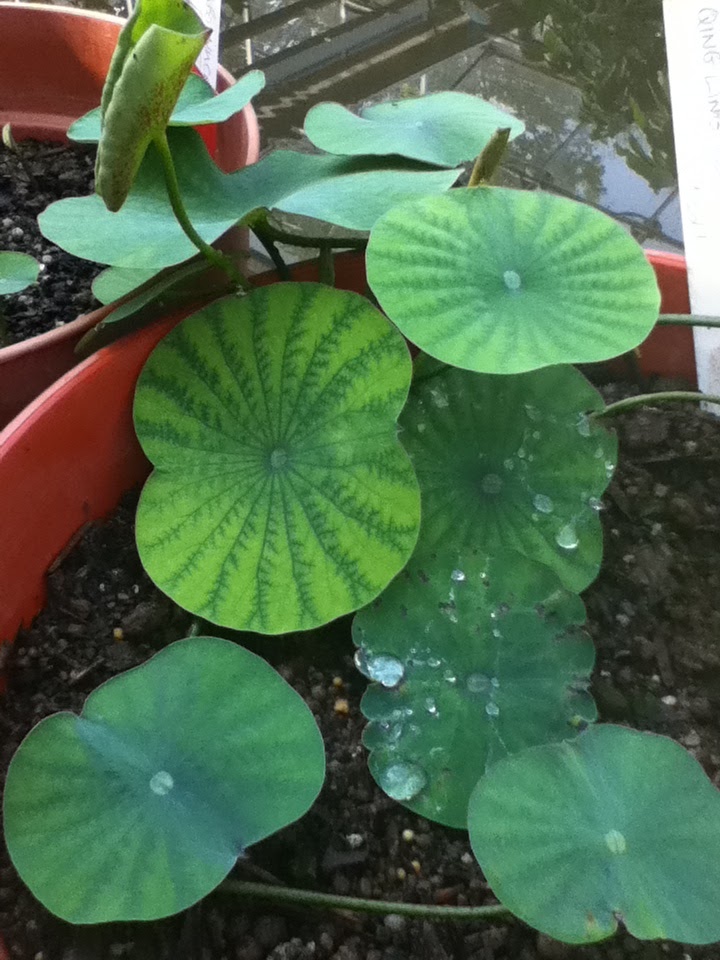
Tania: Bristol University's Botanic Gardens

Instead of trying to put it all into words, here are some pictures I took. The place is fabulous, educational and peaceful, and it's open to all every day. I will be heading back there to spend more time and also, perhaps, to run some kind of creative writing workshop. I want to write there, dammit, that's the main thing!




Sunday, 24 April 2011
Poetry and Extremophile DNA
Fascinating small article in today's Observer entitled "How does a poet ensure his work lives for ever?":
Many artists seek to attain immortality through their art, but few would expect their work to outlast the human race and live on for billions of years. As Canadian poet Christian Bök has realised, it all comes down to the durability of your materials. Bök has written a poem, "The Xenotext", which he is inserting into the DNA of a particularly resilient form of bacteria, Deinococcus radiodurans. This extremophile bacterium can survive exposure to cold, dehydration, acid and vacuums, meaning it could live on in outer space should the Earth cease to exist.
Bök is not one to shy away from a challenge. In his most recent book, Eunoia, each chapter uses words of only one vowel. He has spent nine years researching the Xenotext project and, despite having no academic training in biochemistry, he is doing all the genetic and protein engineering himself. Using a "chemical alphabet", Bök is translating his short verse about language and genetics into a sequence of DNA, which will be implanted into the genome of the bacteria. The protein that the cell produces in response will form a second comprehensible poem.
This is not the first time someone has married art and microbiology. In 2003, US scientists inserted a DNA translation of the song "It's a Small World" into D radiodurans to show that the bacterium could be used as a means of information storage in the event of a nuclear catastrophe. Last year, the American genetic entrepreneur J Craig Venter coded a line from A Portrait of the Artist as a Young Man – "To live, to err, to fall, to triumph, to recreate life out of life" – into DNA, only to receive a cease-and-desist letter from the notoriously litigious James Joyce estate.
Let's hope Bök will have fewer problems with "The Xenotext". He is now in the final stages of coding and a model of the protein goes on display with the two poems at the Text festival in Bury from 30 April.
Interesting stuff... here's the original article, if you want to comment.
Subscribe to:
Posts (Atom)