Showing posts with label Tania. Show all posts

Tuesday, 6 September 2011

Synchotron-inspired short story competition!

Here's a contest after my own heart... and perhaps a few of yours, those of you who harbour secret desires to make it all up! Diamond Light Source, the UK's national synchotron particle accelerator, is attempting a little bit of a PR boost by inviting writers to write short stories (max 3000 words) and flash fiction (max 300 words) somehow inspired by it: the Light Reading competition has cash prizes too! Here's more:

The rules are simple: we’re inviting you to submit a story of up to 3,000 words inspired by Diamond – the facility, the science and the people. There’s also a Flash Fiction prize for stories under 300 words. Stories can be in any genre and there is no minimum word limit. Diamond will shortlist the best of these stories, which will then be judged by an expert panel. The top three writers will receive a cash prize, and these, along with those highly commended by the judges, will be published in an anthology of short stories. Entries must be submitted via this website. The deadline is Wednesday 30 November 2011. 

Good luck to all!

Monday, 22 August 2011

The Guardian on Art + Science

Although "When Two Tribes Meet" is to me a rather divisive title, compared to the Royal Society's insistence that we are all One Culture, there's a nice piece in the Guardian today about artists and scientists working together:
Yes, Leonardo da Vinci was both artist and inventor. True, Brian Cox was in that band before he gave it all up for the Large Hadron Collider. But in general, art and science seem to eye each other uncomprehendingly. Medical research charity the Wellcome Trust has long tried to make artists and scientists work fruitfully together by funding collaborations. Can the divide ever be breached? I talked to four scientists and four artists who have worked together to find out.

... read the rest of the article here.

Friday, 19 August 2011

Lots of Sci-Lit

Sci-Lit is like Sci-Art, but dealing with words... and here are two wonderful illustrations of what this could mean. First, biologist Rachel Rodman's fantastic article in LabLit entitled "Text as Genome: The New Literary Geneticists". What is she talking about? Well, nothing less than Pride and Prejudice and Zombies by Seth Grahame-Smith. Here's a taster:
Pride and Prejudice and Zombies is in this sense a genetically modified organism, derived from the ancestral Pride and Prejudice by the introduction of new (genetic) material taken from the unrelated "monster" genre. A small-scale comparison of the two texts supports this idea: all Grahame-Smith's modifications have parallels with genomic modifications performed (or harnessed) by laboratory scientists. Here, I examine six classes (Insertions, Duplications, Insertions with Duplication, Replacements, Over-expression, and Gain-of Function Mutations) of these modifications, and draw parallels with biological examples.
Intrigued? I was... read the full article here. Biologists, what do you think of her argument?

And the other thing I'd like to draw your attention to is the UK Royal Society's first Festival of Literature and the Arts, One Culture, being held in London, 1-2 October 2011 Here's the introduction to the event by Professor Uta Frith FRS:
This year we are celebrating the anniversary of the foundation of the library and collections of the Royal Society. It all started small, with a single book, and a tiny one at that. Diplomat, natural philosopher and founder member of the Royal Society, Kenelm Digby donated this gift and thereby inspired others to do likewise. In this way he initiated what has now grown into a national treasure. What could be more fitting for a celebration than a festival for literature, arts and science! Its apt name ‘One Culture’ confronts the famous C.P. Snow lecture “Two Cultures” (1959), which pointed out that modern society suffered from a lack of communication between sciences and humanities, and reminds us that the separation of science from other cultural achievements is both artificial and unnecessary.
Looking at this wonderfully colourful programme, it is clear that science is represented in literature far more than is commonly assumed, and we are delighted to feature a number of contemporary authors who can speak to this fact. It is time also to do away with another artificial separation, the idea that different aspects of science, literature and arts, appeal to different age groups. The festival features family events, theatrical performances, discussions, and talks in the wild abandon you should expect of  ‘One culture’. We are extremely proud that superstars of science and literature have agreed to contribute to the experience and that mathematicians, astronomers and biologists will be present alongside historians of science, science writers, poets and novelists, many of whom are household names in the sciences as well as in the creative arts.
This sounds like exactly my kind of event - I'm particularly excited about the Fiction lab event hosted by scientist and novelist Jenny Rohn, (who happens to be the founder of LabLit, which published Rachel's article above!) swiftly followed by Michael Frayn talking about his quantum physics play, Copenhagen. More information about the festival can be found here and on Twitter under the hashtag #oneculture

Friday, 5 August 2011

Dirt Story

I thought hard about the title for this blog post... did I want to attract the kind of readers I never normally attract??! What is this all about? Well, on my first visit to the excellent Wellcome Collection, a place which bills itself as "a free visitor destination for the incurably curious, exploring the connections between medicine, life and art in the past, present and future", to see their exhibition last year on Skin, I found the artworks and exhibits they had collected were really inspiring to me as a writer.

Then... I was asked by Danny at the Wellcome Collection blog to write a 2-part blog post about fiction inspired by science...

And then... I heard about the new exhibition, 'Dirt' (on til end August) and i thought, What if I write a flash story inspired by the exhibition and offer it to Danny for the blog? To my delight, he agreed. And the result, a short short story called Her Dirt, is now published on the Wellcome Collection blog. A quick taste:


She keeps her dirt, and at first her dirt is enough. But then it isn’t. So she takes to taking.

There is history here. A clean clean child. Or, rather: demands for a clean clean child. A pure-white home, a childhood washing and re-washing. Do you need to hear of distant mothers and of even further-spinning fathers?
You can read the rest here this is the first piece of flash fiction to be on the WC blog - please feel free to leave your comments there and let them know if there should be more!  

Tuesday, 12 July 2011

Beautiful data

A lovely article over at Wired today:
That science has benefited immensely from technological advances in the last few decades, or even the last century, is a fact. But one research tool that many scientists would argue need not be improved is the handwritten field notebook.
Go over there to see the stunning artwork >>

Sunday, 26 June 2011

Writing Science Into Fiction

Now here's an event after my own heart, at the Royal Society in London on July 20th:

Imagination and interpretation: Writing science into fiction

Starts: 6pm on 20 July 2011
Finishes: 7.30pm on 20 July 2011
Venue: The Royal Society, London

Speakers: Pat Barker CBE, Philip Sington
Chair: Prof. Sally Shuttleworth

Join Pat Barker CBE and Philip Sington in a discussion about representing scientists and science in contemporary fiction. Both authors have imaginatively used the archives of early 20th century scientists as the basis for major works of fiction. They will reveal what attracted them to these historical sources in particular, and discuss the pleasures and pitfalls of interpreting modern science in fictional worlds.

The event is free and all are welcome to attend. No ticket or advance booking is required - doors will open at 5.30pm and seats will be allocated on a first-come-first-served basis.

Monday, 25 April 2011

Tania: Bristol University's Botanic Gardens

I was very honoured to be given a guided tour of the University's Botanic Gardens last week by its director, Simon Hiscock, professor of plant and pathogen biology. It was a glorious day, the sun shone as we wandered around, it was the perfect visit. As a writer, I was inspired by every aspect of the gardens - from their design, plants interspersed with artwork made by one of the Gardens' employees, to the sections they are divided into, which include a working Chinese herbal medicine garden and a section with plants grouped according to the very new DNA-based classification.

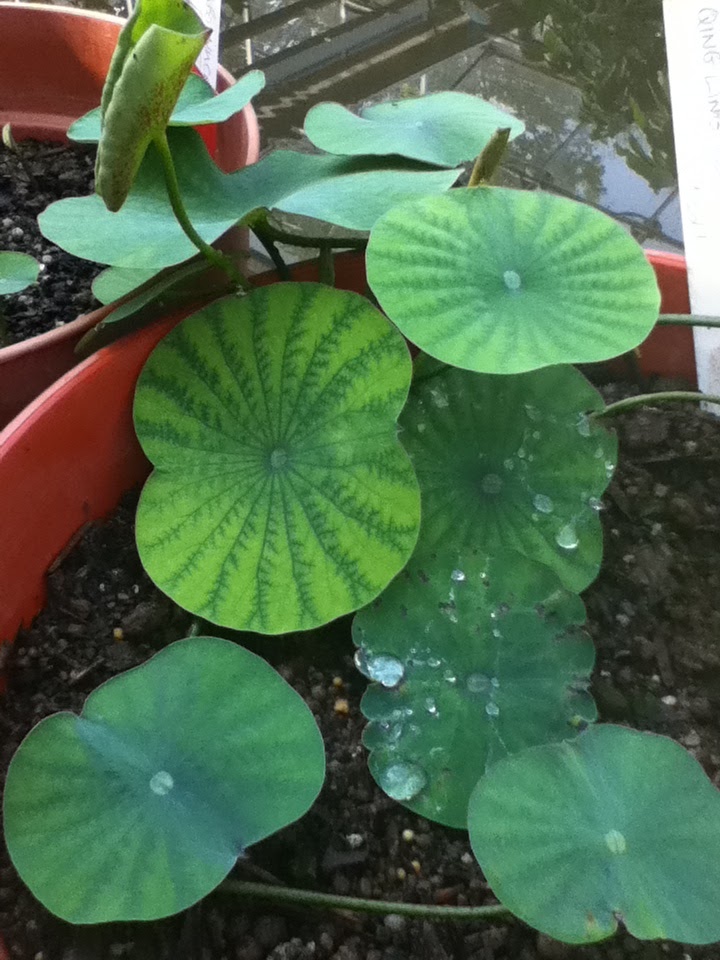
Instead of trying to put it all into words, here are some pictures I took. The place is fabulous, educational and peaceful, and it's open to all every day. I will be heading back there to spend more time and also, perhaps, to run some kind of creative writing workshop. I want to write there, dammit, that's the main thing!